
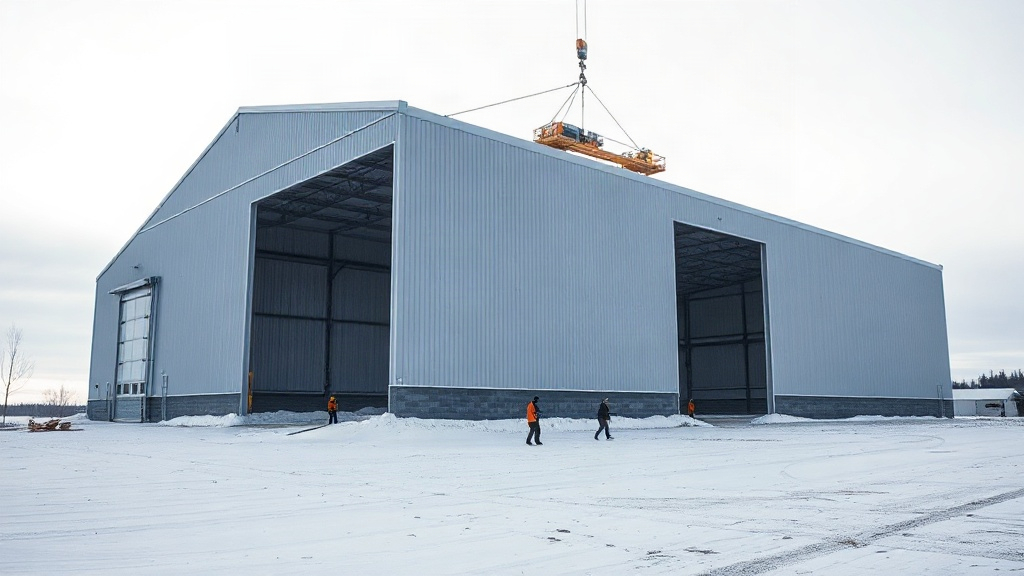
Anyone who has stood on a job site in January knows that a building envelope in Canada is judged by a harsher standard than almost anywhere else. Snow loads in parts of Ontario and Quebec can exceed 2.5 kPa, coastal BC throws wind-driven rain sideways, and the Prairies swing from -35°C to +30°C in the same calendar year. That is the environment where Sandwich Panels Canada buyers have to make a decision that will outlast at least two roofing cycles. This guide is written for contractors, designers and owner-builders who want to get that decision right the first time, not after the first leak.
What Actually Makes a Sandwich Panel Work
The name describes the build: two rigid skins bonded to an insulating core. In practice, the performance comes from how those three layers behave together. The skins carry tension and compression. The core resists shear and blocks heat transfer. The adhesive bond is what stops the whole assembly from delaminating when thermal movement tries to pull the faces apart.
Most panels sold north of the border use one of three cores:
- EPS (expanded polystyrene) – the workhorse for roofs and walls where cost per square foot matters. Stable R-value, decent moisture tolerance, widely available.
- PIR (polyisocyanurate) – higher R-value per inch, better fire performance, common in commercial and cold-storage work.
- Mineral wool – non-combustible, excellent acoustic damping, the default for schools, hospitals and any project chasing a strict fire rating.
Skins are typically 26 to 24 gauge pre-painted steel, though aluminum and stainless show up in food plants and coastal installations. The coating system (polyester, PVDF, plastisol) matters more than most buyers expect, because UV exposure and salt spray attack the paint long before the steel gives up.
Why Canadian Conditions Change the Spec Sheet
A panel that performs well in Texas will not automatically perform in Manitoba. Three forces do the damage here.
Thermal bridging at fasteners
Every screw that penetrates the panel is a small thermal bridge. In a heated building, that shows up as condensation on the fastener head and, over a few seasons, as rust streaks and loosened fixings. The fix is straightforward: use thermal break washers, keep fasteners to the minimum the wind load allows, and never over-torque, because a crushed washer loses its seal.
Snow load and deflection
Roof panels are structural members, not just cladding. Span tables published by manufacturers assume specific support spacing, and drifting snow can double the load in valleys and behind parapets. If your design calls for a 3-metre single span in a high-snow region, check the deflection limit, not just the strength limit. A panel that holds the snow but sags visibly will pond water at the seams and fail from the inside out.
Freeze-thaw cycling
Water that gets into a joint and freezes expands roughly 9 percent. Over a hundred cycles a year, that is enough to open a poorly sealed lap. This is why concealed-fix systems with factory-applied sealant tape outperform exposed-fix panels on roofs, even though they cost more per square foot.
Choosing Panel Thickness Without Guessing
Thickness gets treated as a comfort decision when it is really an engineering one. A quick working framework:
- Start with the required U-value or effective R-value for your climate zone and building type.
- Check the span table for your purlin spacing at the governing snow and wind load.
- Confirm the core material meets the fire rating your authority having jurisdiction expects.
- Only then compare price between suppliers.
For a heated shop in southern Ontario, 100 mm PIR is often the sweet spot. For an unheated storage building in Alberta, 80 mm EPS frequently does the job at a lower cost. Cold storage and cannabis facilities usually push past 150 mm and add a vapour barrier strategy that treats the panel as the primary air barrier.
Installation Details That Decide Long-Term Performance
Panels rarely fail because the product was wrong. They fail because of what happened at the edges.
Cut edges and exposed cores
Every field cut exposes the core. On EPS and PIR, that exposed face should be sealed with a closure profile or a compatible sealant, not left open. Mineral wool edges need a different approach because the fibres wick water. Ask your supplier for the closure detail they actually test, not the one that looks tidy in a brochure.
Vapour control and air tightness
In cold climates, warm moist air migrating outward is the enemy. The panel's interior skin is usually the vapour retarder, which means every penetration, every door frame and every roof-wall junction has to be detailed as an air seal. A single unsealed conduit can deposit more moisture inside the assembly than a whole wall of slightly imperfect seams.
Fastener layout and thermal movement
Steel expands and contracts with temperature. Long roof runs need to be designed with that movement in mind, either through panel length limits or through slotted connections at the eaves. Racking a panel against its fixing holes is a slow, invisible failure that shows up as oil-canning and seam separation two winters later.
Where Sandwich Panels Make the Most Sense
These systems are not the right answer for every building, but they win clearly in a few situations:
- Cold storage, food processing and agricultural buildings where a continuous insulated envelope is the priority.
- Commercial and industrial roofs where speed of enclosure reduces financing costs.
- Modular and prefabricated construction, because panels ship flat, cut predictably and install with a small crew.
- Retrofit over an existing structure when added dead load and thickness are constrained.
Where they struggle is in highly articulated architecture with many small planes and complex junctions. Every corner, every penetration and every change in plane adds a detail that has to be sealed correctly. Simple geometry rewards panels; complex geometry punishes them.
Questions Buyers Ask Before Ordering
How long do sandwich panels last in Canada?
With a properly specified coating and correctly sealed joints, a quality panel system can reasonably be expected to perform for 30 to 40 years. The variables that shorten that are coating choice, coastal salt exposure, and whether the installer respected the sealant and fastener details. The steel usually outlives the paint, so the coating spec is where longevity is really decided.
Do I need a vapour barrier with insulated panels?
In most heated Canadian buildings, yes, but the panel itself often serves as part of the system. The interior steel skin acts as a vapour retarder when all joints and penetrations are sealed. Adding a separate polyethylene barrier on top of that is usually unnecessary and can trap moisture if it is not continuous. Get this detail reviewed by someone who understands your specific assembly.
Can sandwich panels be installed in winter?
Yes, and that is one of their practical advantages. Panels can be installed in cold weather because there is no wet trade involved and no curing time. The constraints are sealant temperature ratings, snow clearing on the roof, and safe access. Check that the sealant you plan to use is rated for the temperature on installation day, since some tapes lose adhesion below -10°C.
What is the difference between roof and wall panels?
Roof panels carry structural load and are profiled for drainage, with raised ribs and a lap detail designed to shed water. Wall panels are typically flatter, focused on appearance and wind resistance rather than span. They are not interchangeable, and using a wall panel on a roof is one of the more common and expensive mistakes in self-built projects.
How do I compare quotes from different suppliers?
Compare on five lines: core material and density, skin thickness and coating system, fire rating certification, span table at your actual loads, and the closure and sealant package included. A quote that looks 20 percent cheaper often omits the flashings and closures, which is where the real cost of a weathertight envelope lives.
Getting the Specification Right
The difference between a panel roof that performs for decades and one that leaks in year four is almost never the brand on the truck. It is whether the thickness, coating, core and connection details were chosen for the actual climate and building use. Work through the load, the fire rating and the moisture strategy before you look at price, and the rest of the decision tends to make itself.