
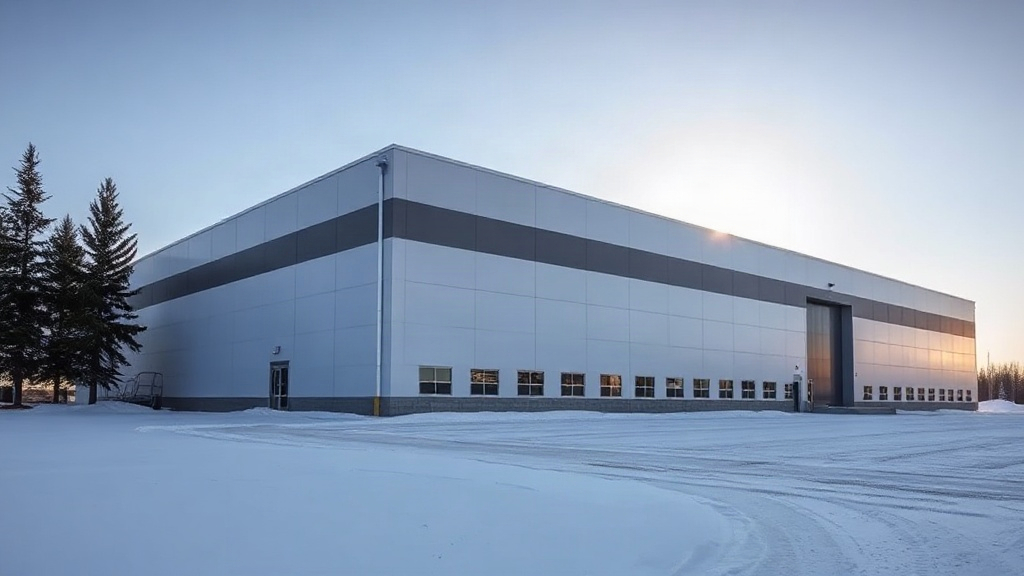
When you're planning a build in Canada, the envelope you choose has to handle everything from February deep freezes to July heat waves. Sandwich Panels Canada professionals turn to are not just another cladding option; they're a system that combines structure, insulation, and weather resistance in a single component. If you've been weighing your options for a warehouse, cold storage facility, or even a custom home, understanding how these panels perform in Canadian conditions can save you months of headaches and thousands in energy costs.
What Exactly Are Sandwich Panels?
A sandwich panel is a composite building element made of two rigid outer skins bonded to a lightweight insulating core. The skins are typically made from pre-painted steel, aluminum, or sometimes fiberglass. The core is where the magic happens: polyurethane (PUR), polyisocyanurate (PIR), expanded polystyrene (EPS), or mineral wool. Each core material brings different fire ratings, R-values, and cost profiles.
The bonded assembly acts like an I-beam in principle. The skins carry tensile and compressive stresses while the core resists shear and blocks thermal transfer. That structural efficiency means you get a wall or roof section that is thin, strong, and highly insulating all at once.
Why the Canadian Climate Changes the Conversation
In milder climates, builders can get away with lower R-values and simpler vapor management. Canada doesn't offer that luxury. From the Lower Mainland's damp chill to the Prairies' -40°C snaps and the Atlantic's wind-driven rain, the envelope has to manage extreme temperature differentials, moisture drive, and snow loads that can exceed 3 kPa in some regions.
Sandwich panels handle these demands well because the insulation is continuous. There are no studs or joists creating thermal bridges every 16 inches. That continuity is why a 100 mm PIR panel can outperform a much thicker batt-insulated wall in real-world performance.
Choosing the Right Core for Your Project
Not all cores are equal, and the right choice depends on your building type, budget, and code requirements.
- EPS (Expanded Polystyrene): The most budget-friendly option. Good R-value per dollar, lightweight, and easy to work with. Best for temperature-controlled warehouses and agricultural buildings where fire spread isn't a primary concern.
- PUR/PIR (Polyurethane/Polyisocyanurate): Higher R-value per inch, better fire performance, and excellent for cold storage and food processing facilities. PIR offers improved charring behavior compared to PUR.
- Mineral Wool: Non-combustible and ideal for applications requiring strict fire ratings, such as high-occupancy buildings or projects near property lines. Heavier and more expensive, but sometimes the only compliant choice.
Talk to your local supplier about what the Canadian building code and your provincial amendments require. Fire ratings, smoke development, and flame spread classifications matter, and they vary by application.
R-Values That Actually Matter
R-value alone doesn't tell the whole story. You also need to consider thermal bridging, air leakage, and how the panel performs over time. PIR panels typically range from R-6 to R-7 per inch, while EPS sits around R-4 per inch. Mineral wool lands near R-4 as well but brings fire resistance that the others can't match.
For a cold storage facility in Manitoba, a 150 mm PIR panel might be the baseline. For a machine shed in Ontario, a 100 mm EPS panel could do the job at a fraction of the cost. The key is matching the panel to the actual demand of the space.
Installation Insights from the Field
Sandwich panels go up fast, but they're not forgiving of poor planning. Here's what experienced crews know:
- Sequence matters. Start from a corner and work outward. Cutting panels on site should be minimized; order precise lengths whenever possible.
- Seal every joint. Even a small gap lets moisture in and warm air out. Use the manufacturer's recommended sealants and gaskets, and don't substitute.
- Handle with care. The pre-painted finish can scratch, and dents compromise the bond between skin and core. Use proper lifting equipment and store panels on edge, not flat.
- Watch the vapor barrier. In heating-dominated climates, the vapor barrier typically goes on the warm side. But with sandwich panels, the panel itself often serves as the vapor retarder. Confirm the assembly with a building science professional.
One more thing: thermal expansion. Metal skins expand and contract with temperature swings. That's why fixed and sliding connections are used together. If you fasten everything rigidly, you'll get oil-canning and fastener fatigue.
Common Mistakes to Avoid
I've seen crews try to save time by skipping the butyl tape on roof panels. That decision leads to leaks within two winters. I've also seen panels stored flat on the ground, which traps moisture and warps the core. And perhaps most costly: ordering panels without accounting for the building's structural movement. Expansion joints aren't optional.
Another trap is assuming all suppliers deliver the same quality. Core density, adhesive bond strength, and coating thickness vary widely. Ask for test reports and warranty terms. A cheaper panel that delaminates in five years is no bargain.
Cost Considerations for Canadian Projects
Sandwich panels often have a higher upfront cost than traditional stick-built walls with batt insulation. But the total cost of ownership tells a different story. Faster installation reduces labor hours. Continuous insulation lowers heating and cooling bills. And the durable finish means less maintenance over the building's life.
For a 10,000 square foot warehouse, the savings in construction time alone can be significant. Add energy savings over a 20-year horizon, and the numbers usually favor panels. That said, budget matters. If you're building a temporary structure or a low-demand space, other options might pencil out better. Run the numbers for your specific case.
Financing and Incentives
Some Canadian provinces offer energy efficiency incentives for commercial buildings that exceed minimum code requirements. High-performance sandwich panels can help you qualify. Check with your provincial efficiency program and your utility before you finalize your design.
Frequently Asked Questions
How do sandwich panels perform in extreme cold?
They perform very well when specified correctly. The continuous insulation eliminates thermal bridging, and the factory-bonded skins prevent air infiltration. The key is choosing a core with sufficient R-value for your climate zone and ensuring all joints are properly sealed. In extreme cold, PIR and mineral wool cores are often preferred over EPS for their better thermal and fire performance.
Can sandwich panels be used for both walls and roofs?
Yes, but the profiles differ. Roof panels typically have deeper ribs for spanning capability and water drainage, while wall panels have shallower profiles for a cleaner look. You can't substitute one for the other without compromising structural and weather performance. Always specify the correct panel type for each application.
What is the typical lifespan of sandwich panels in Canada?
With proper installation and maintenance, you can expect 30 to 50 years. The steel skins are usually coated with a warranty of 20 to 40 years depending on the coating system. The core doesn't degrade under normal conditions. The main threats are physical damage, poorly sealed joints, and exposure to aggressive chemicals.
Are sandwich panels fire-rated?
It depends on the core. Mineral wool panels are non-combustible and can achieve high fire resistance ratings. PIR panels offer improved fire performance over PUR, while EPS has the lowest fire resistance. Canadian building codes specify fire ratings based on building type, height, and occupancy. Always verify that your chosen panel meets the required rating for your project.
How do I find a reliable sandwich panel supplier in Canada?
Look for suppliers with a track record in your region, ask for local project references, and request third-party test reports for fire, structural, and thermal performance. A good supplier will also provide installation guidance and warranty support. Don't base your decision on price alone; the cheapest panel can become the most expensive if it fails early.
Making the Right Choice for Your Build
Sandwich panels are a smart solution for Canadian construction when you match the panel to the climate, the building use, and the code requirements. They're not a one-size-fits-all product, and the details matter. Get your specification right, work with experienced installers, and you'll have an envelope that performs for decades. If you're still weighing options, talk to a supplier who understands Canadian conditions and can walk you through the trade-offs. Your building will thank you.