
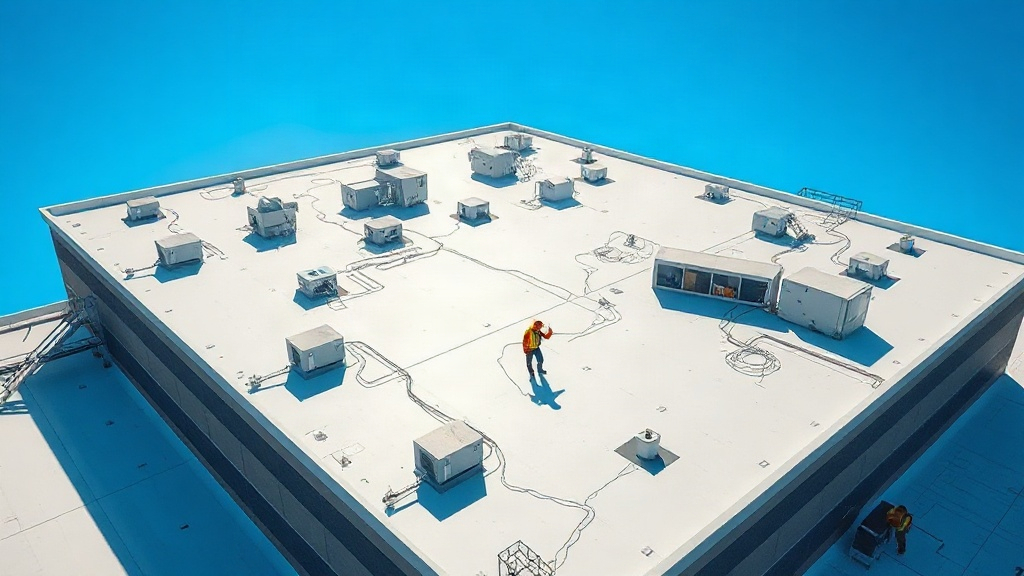
When you manage a commercial facility, the roof over your head is more than just a cover—it's a critical asset that protects your inventory, your employees, and your bottom line. Choosing the right Commercial Roofing Systems can mean the difference between decades of reliable service and a never-ending cycle of repairs. With so many options available, it's essential to understand the strengths and weaknesses of each system, as well as the factors that influence their performance. This guide will walk you through the key considerations, from material selection to maintenance, so you can make a confident decision for your property.
Understanding Commercial Roofing Systems
Commercial roofs are not one-size-fits-all. They are engineered systems that combine materials, insulation, and attachment methods to create a weathertight barrier. Unlike residential roofs, which are often sloped and covered with shingles, commercial roofs are typically low-slope or flat, requiring specialized membranes and drainage solutions. The choice of system depends on your building's structure, climate, budget, and intended use. Let's break down the most common types.
Built-Up Roofing (BUR)
Built-up roofing, often called tar and gravel, has been a staple for over a century. It consists of multiple layers of reinforced fabric (plies) alternated with bitumen (asphalt or coal tar) and topped with a surfacing material like gravel or mineral granules. BUR is known for its durability and redundancy—if one layer fails, others still provide protection. However, installation is labor-intensive and can be messy. It's a good fit for buildings with heavy foot traffic or where chemical resistance is needed.
Modified Bitumen Roofing
Modified bitumen is essentially a evolution of BUR, supplied in rolls and applied with heat or adhesive. It offers similar durability with fewer layers and easier installation. The modifiers (APP or SBS) enhance flexibility and weatherability. This system is popular for its proven track record and is often used in retrofit projects. It can be torch-applied, which requires skilled labor, or self-adhered for safer installation.
EPDM (Rubber) Roofing
EPDM (ethylene propylene diene monomer) is a synthetic rubber membrane that comes in large sheets, minimizing seams. It's highly resistant to UV radiation, ozone, and extreme temperatures, making it a favorite in cold climates. EPDM is also relatively inexpensive and easy to repair. However, it can be punctured by sharp objects, and seams can fail if not properly installed. It's available in black or white; white reflects sunlight and can reduce cooling costs.
TPO and PVC Roofing
Thermoplastic polyolefin (TPO) and polyvinyl chloride (PVC) are single-ply membranes that are heat-welded at the seams to create a monolithic surface. Both are highly reflective, energy-efficient, and resistant to chemicals and grease. TPO is generally more affordable and popular in the U.S., while PVC offers superior chemical resistance and is often used in restaurants or industrial settings. These membranes are lightweight and can be installed over existing roofs in some cases, reducing landfill waste.
Metal Roofing
Metal roofing systems, including standing seam and corrugated panels, are known for their longevity and low maintenance. They are excellent for sloped roofs but can also be used on low-slope with proper sealing. Metal reflects solar heat, reducing cooling loads, and can be recycled at the end of its life. The upfront cost is higher, but the life cycle cost can be lower due to durability. Metal roofs are also favored for their architectural appeal.
Spray Polyurethane Foam (SPF) Roofing
SPF roofing involves spraying a mixture of polyol and isocyanate onto the roof surface, where it expands into a foam, then applying a protective coating. SPF is seamless, lightweight, and provides excellent insulation. It can be applied over most existing roofs and conforms to irregular shapes. However, it requires experienced applicators and the coating must be maintained regularly. SPF is ideal for roofs with complex geometry or where added insulation is desired.
How to Choose the Right System for Your Building
Selecting a commercial roofing system is a balancing act. Consider these factors:
- Climate: In hot climates, reflective membranes like TPO or PVC can lower cooling costs. In cold climates, EPDM or metal may perform better.
- Building use: Restaurants need grease-resistant roofs (PVC). Buildings with heavy foot traffic need durable surfaces (BUR or modified bitumen).
- Budget: Upfront cost vs. life cycle cost. Metal and SPF have higher initial costs but may last longer.
- Structural capacity: Some systems are heavier (BUR) and may require structural reinforcement.
- Maintenance capabilities: If you lack in-house maintenance, choose a system with low upkeep, like metal or TPO.
- Energy goals: Cool roofs (reflective) can contribute to LEED credits and reduce urban heat island effect.
Consult a roofing professional to assess your specific situation. They can perform a roof evaluation and recommend options that align with your goals.
Installation Considerations
Proper installation is key to performance. Here are some best practices:
- Hire licensed and insured contractors: Verify credentials and ask for references.
- Ensure proper substrate preparation: The roof deck must be clean, dry, and structurally sound.
- Pay attention to details: Flashing, drainage, and penetration seals are common failure points.
- Consider weather conditions: Some adhesives and membranes require specific temperatures for application.
- Inspect during installation: Regular inspections can catch issues early.
A warranty is only as good as the installation. Most manufacturers require certified applicators to validate warranties, so choose a contractor with the necessary certifications.
Maintenance and Longevity
Even the best roofing system needs care. A proactive maintenance program can double the life of your roof. Here's what to include:
- Regular inspections: At least twice a year and after severe weather.
- Cleaning: Remove debris from drains, gutters, and roof surface.
- Prompt repairs: Fix small issues before they become major leaks.
- Documentation: Keep records of inspections, repairs, and warranties.
- Professional check-ups: Hire a roofing consultant for annual assessments.
For SPF roofs, recoating every 5-10 years is necessary. For single-ply membranes, seam checks and patching are common. Metal roofs may need tightening of fasteners and touch-up painting.
Frequently Asked Questions
What is the most durable commercial roofing system?
Durability depends on factors like climate and maintenance. Built-up roofing (BUR) and modified bitumen are known for their longevity, often lasting 20-30 years. Metal roofing can last 40-70 years, and SPF can last 30+ years with proper recoating. However, installation quality and maintenance are crucial for any system.
How do I know if my commercial roof needs replacement or repair?
Signs that replacement may be needed include widespread leaks, blistering, severe ponding water, and a roof that is over 20 years old. If repairs are localized and the roof is otherwise in good condition, patching may suffice. A professional inspection can provide a definitive answer.
Can I install a new commercial roof over an existing one?
Sometimes, yes. Many single-ply systems can be installed over an existing roof if the substrate is sound and local codes allow. However, building codes may limit the number of layers. A tear-off is often recommended to inspect the deck and add insulation. Consult a roofing contractor to determine the best approach.
What is the average cost of a commercial roofing system?
Costs vary widely based on material, labor, and region. As a rough range, EPDM might cost $4-$8 per square foot installed, TPO $5-$10, metal $8-$16, and SPF $7-$12. These are estimates; get multiple quotes for your specific project.
How can I improve the energy efficiency of my commercial roof?
Choose a cool roofing material with high solar reflectance (like white TPO or PVC) or apply a reflective coating. Adding insulation during installation or retrofit can also reduce heat transfer. Additionally, ensure proper ventilation and address air leaks in the building envelope.
Your commercial roof is a long-term investment. By understanding the options and planning for maintenance, you can protect your building and your budget for years to come.